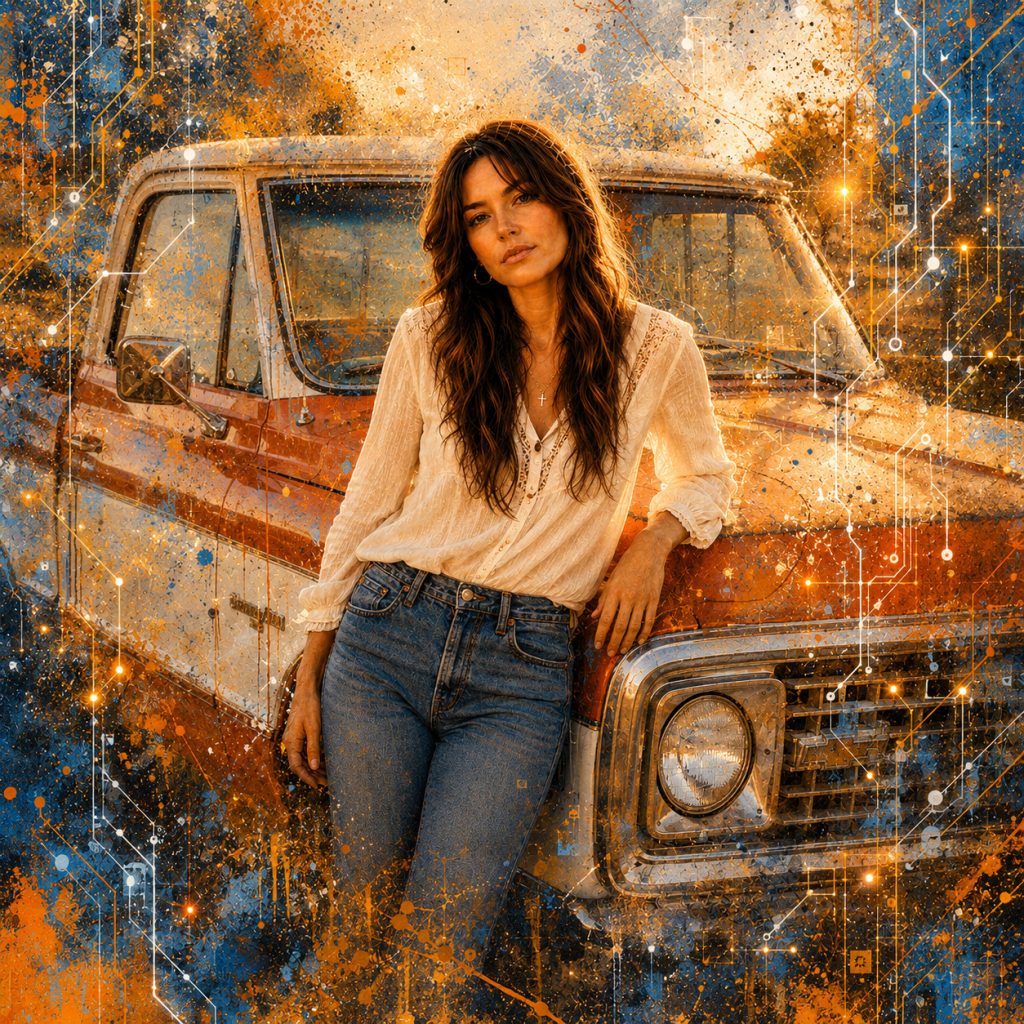
Chapter 1 The Piano and the Purple Hondo – The Story of Ailie Mae
Chapter One tells how a borrowed camp guitar and a hard-to-play purple Hondo acoustic became the painful, cool beginning of David L. Markham’s songwriting craft. Read
Chapter 2: Poetry Becomes Song Lyrics — The Story of Ailie Mae
When I was probably in middle school, maybe seventh or eighth grade, I was so bored in school that I just started writing on paper. I could not really do anything else because the teacher would know if we were playing around, so I had to write. Read
Chapter 3: Classical and Rock Influences — The Story of Ailie Mae
There was a music store not very far from my house. It had a special room that was enclosed. There were speakers and a turntable to play vinyl LPs. It was full of classical music. That is where I began to listen and appreciate other music. Read
Chapter 4: The Stratocaster, and the Four-Track Recorder — The Story of Ailie Mae
Then, back in Lloyd’s room, next to his bed, he had a Tascam four-track cassette recorder. The Portastudio MK1 I think it was called. It was a little four-track recording studio. It was just a little console with mixing buttons on it, and you put your cassette tape in it. Read
Chapter 5: The Live Sound Engineer — The Story of Ailie Mae
That is why the later AI production did not come out of nowhere. With Suno decades later, I was mixing, rejecting one version, keeping another, asking for less reverb, more bass, a closer vocal, a lower register, a different beat, editing the songs for more believable emotional delivery, I was using ears that had been trained long before AI existed. Read
Chapter 6: Coming to Jesus Moment and Songs for Myself — The Story of Ailie Mae
When I became a Christian, I thought I was going to be a Christian artist. I thought that was what God wanted for me. I thought He wanted me to write music to help change the world through music. Read
Chapter 7: Seminary Love Songs That Cost Me a Broken Heart — The Story of Ailie Mae
So during those three years of seminary, I was about twenty-six, twenty-seven, twenty-eight years old. I had been playing guitar since I was sixteen. I had been writing music since I was sixteen. I had been writing poetry even longer, and I had been playing musical instruments longer than that. Read
Chapter 8: Dusty Brown and the Digital Recording Studio — The Story of Ailie Mae
Dusty Brown was not the end of my music story, but it was the high point of my pre-AI recording life. It was the season of Dallas, printing, the Seagull 12-string, the Roland VS-880 studio, DAT tapes, the female Misty Hair parts, and the dream of making a complete world out of words and music. Read
Chapter 9: Digitization of Boxes of Tapes During the Pandemic of 2020
At the time I was restoring my old four track recordings, I did not know what would solve that problem. I did not know that a door was about to open through technology. I did not know that AI music tools would arrive in a way that could take an old melody, an old lyric, an old emotional direction, and help build a new version around it. Read
Chapter 10: Discovering AI Music Enhancement — The Story of Ailie Mae
After AI enhancement, my songs sounded like me playing, and they sounded like my real voice. I was listening to professionally recorded, studio-level productions of my own music. But something was wrong. It was dull. It was boring. Read
Chapter 11: Songs Enhanced by AI Evolve Into Something Better as You Learn — The Story of Ailie Mae
My old songs were mostly acoustic guitar and voice. The first album represents my original style and music even though it is also evolved a bit. Other words could describe it as elevated and modernized. Read