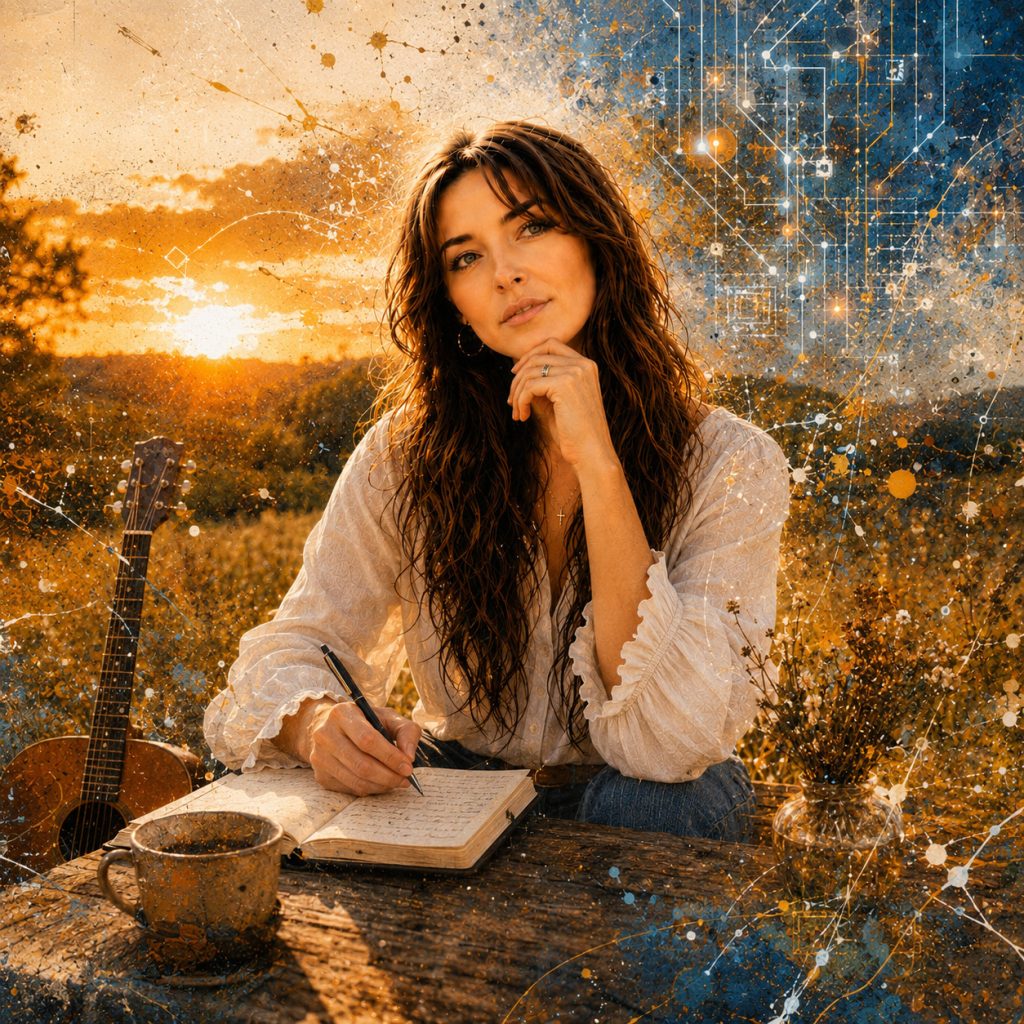
I heard a young music student make a point that a lot of people are probably thinking right now:
If AI can help create music, do young musicians still need to spend years developing their craft?
It is an honest question. It is also a dangerous one.
Because the answer is not less craft.
The answer is more.
AI can generate sound. It can imitate styles. It can create melodies, harmonies, beats, textures, voices, and arrangements faster than any human being ever could. That part is real. No serious person should pretend it is not happening.
But music is not only sound.
Music is judgment.
Music is knowing when a line is weak.
Music is knowing when a chorus is too high.
Music is knowing when a lyric sounds clever but does not carry truth.
Music is knowing when the first version was exciting, but the tenth version finally became honest.
That is craft.
A person without craft can use AI and get noise that sounds impressive for thirty seconds. But a person with craft can use AI and shape something that carries meaning.
That is the difference.
AI does not remove the need for musicianship. It exposes whether musicianship is there.
A songwriter still needs to understand words. A producer still needs to understand emotion. A singer still needs to understand phrasing. A composer still needs to understand tension and release. Even if AI is involved, somebody still has to decide what belongs and what does not.
The machine can give you options.
It cannot give you taste.
It cannot give you a life story.
It cannot give you twenty years of unfinished songs sitting in a drawer.
It cannot give you the ache behind a lyric, the reason a melody bends upward, or the spiritual weight behind a line that came from prayer, failure, repentance, hope, or grief.
Those things still come from the human being.
That is why craft still matters.
With Ailie Mae, AI is part of the process, but it is not the whole process. The songs are written, composed, and produced by David L. Markham. The AI tools help bring the music into a new form, but the heart of the work comes from years of writing, listening, revising, failing, learning, and trying again.
A song does not become finished just because a computer gives you a version of it.
Sometimes the lyric has to change.
Sometimes the vocal is too dramatic.
Sometimes the beat is wrong.
Sometimes the emotional center is missing.
Sometimes the AI gives you something beautiful, but it is beautiful in the wrong direction.
That is where craft enters.
Craft says, “No, not that.”
Craft says, “Try again.”
Craft says, “The verse is close, but the chorus is not honest yet.”
Craft says, “The singer is showing off instead of serving the song.”
Craft says, “This part sounds impressive, but it does not move the heart.”
That kind of judgment does not come from pushing a button. It comes from years of caring about the work.
Young musicians should not hear about AI and think, “Now I do not have to learn.”
They should think, “Now I need to learn even more, because the tool is powerful.”
A powerful tool in untrained hands can make a mess faster.
A powerful tool in trained hands can open doors.
If you are young and you want to make music, learn your craft. Learn melody. Learn rhythm. Learn lyrics. Learn structure. Learn your voice. Learn why songs work. Learn why some songs fall apart. Learn how to listen. Learn how to cut your favorite line when it does not serve the song.
Do not let AI make you lazy.
Let it make you sharper.
Because in the future, there will be millions of songs made with AI. Millions. Maybe more.
The question will not be, “Can you make a song?”
The question will be:
Can you make one that matters?
Can you make one that feels true?
Can you recognize the difference between a good sound and a real song?
That is craft.
And craft is not dead.
Craft is going to be one of the only things left that separates the flood of generated music from the songs that actually reach people.
AI can help build the house.
But somebody still has to know what a house is for.
Somebody still has to know where the door belongs.
Somebody still has to know when the foundation is crooked.
That is the role of the artist.
That is the role of the songwriter.
That is the role of the producer.
So yes, use the tools. Learn the tools. Experiment with the tools. Do not be afraid of them.
But do not abandon your craft.
Because the tool may help you make music.
But craft is what helps you make music worth hearing.
Ailie Mae is an AI-assisted Christian artist featuring original songs written, composed, and produced by David Lawrence Markham.